Showing posts with label bird flu. Show all posts

Monday, August 14, 2023

Bird flu is a zoonosis and domestic cats are getting it in Poland

At the moment, the word "zoonosis" is being used quite a lot in online news media and I'll tell you why. "Zoonosis" means an infectious disease that is transmitted between species including from animals to humans or from humans to animals. This would also be described as a zoonotic disease.

And as it happens, it is not only the news media who are reporting on bird flu which is a zoonosis as the Centres for Disease Control and Prevention (CDC) report that bird flu has been found in Polish domestic cats. You may have read about this but it is interesting that CDC are reporting on it.
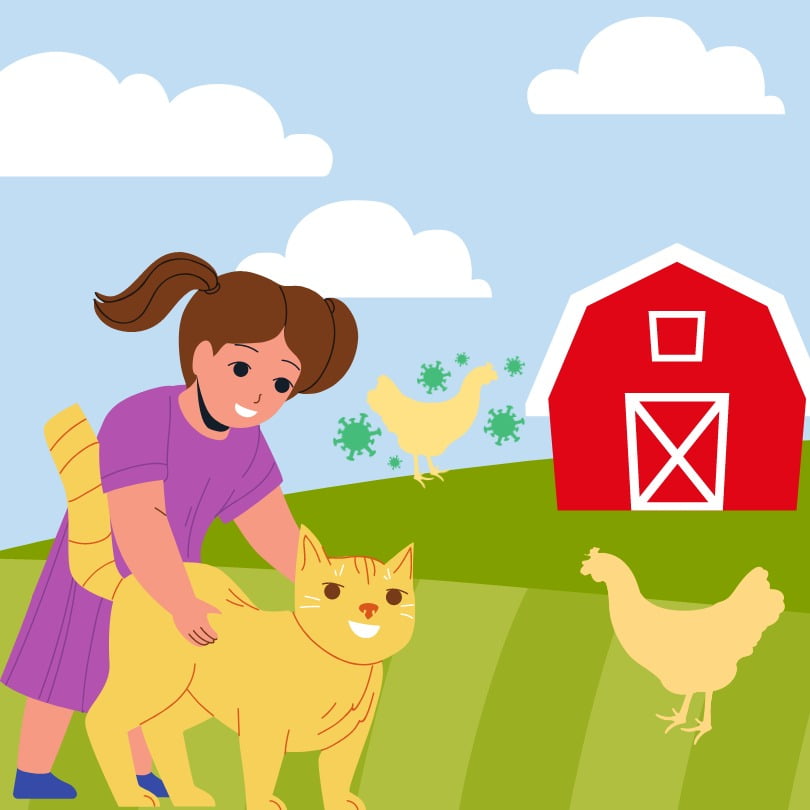
Beware the zoonosis bird flu
Beware the zoonosis bird flu. Image: MikeB

And the word "zoonosis" is an important word today because it was first used a lot during Covid-19. And the reason for that is because Covid-19 is also a zoonosis as it can be transmitted from animals to people and people to animals. It's the way that tigers and lions at some zoos caught the disease from their zookeepers. Some people still think cat owners can get it and are getting from their cats.

And there is a general concern that another pandemic may start up from the transmission of an unknown disease in a wild animal to a human.

And in this instance, an outbreak of H5N1 bird flu in household cats was recently reported by the World Health Organisation. The news underlines the fact that this virus can infect and cause illness in household pets.

The report is that 34 domestic cats across eight provinces in Poland tested positive for avian flu influenza A otherwise known as H5N1 bird flu.

Sadly, many of the infected cats had symptoms of neurological damage. There symptoms included paralysis and seizures. They became severely ill or died. Bird flu is widespread globally among domestic poultry and wild birds and it's caused the occasional infection in mammals.

The risk assessment to humans, despite the above report, is low and CDC states that there is no evidence of cat-to-cat transmission. In general, domestic cats rarely become infected with H5N1. When they do it is most often after eating raw, sick or dead infected wild birds or poultry or they live in an environment contaminated by these birds, perhaps on a farm.

Apparently, among the infected cats most of them lived inside with some outdoor access but some were primarily outdoor cat which will leave them likely to be exposed to wild birds if they were keen predators as most domestic cats are.

It is also reported that some infected cats were fed raw poultry or poultry parts. Of the 34 infected cats, 11 died from their infection and 14 were euthanised because of the infection. The exact source of H5N1 of exposure is unclear in this instance.

I have written about raw cat meat. Bird flu is one reason why raw meat is risky as a cat diet.

Tuesday, July 11, 2023

Feeding domestic cats with raw chicken necks carries a small risk of transmitting bird flu to them

This is a cross post because I think the subject is important. You will see many websites on the Internet recommending that cat caregivers provide their cat with raw chicken necks in order that they can chew on a raw product which is good for their gums and teeth and their health generally. It is believed that the risk of eating raw chicken necks and wings because of the cartilage and bone content is far outweighed by the benefits to their oral health.

Testing for bird flu
Image: MikeB. Testing for bird flu.

So, it is a balanced decision as to whether you feed your domestic cat companion raw chicken 'on the bone' so to speak. But that balance has been upset by the fact that bird flu is present in Europe. In Poland it appears to be at epidemic proportions and in that country around two dozen cats are believed to have died of bird flu, 13 of which were found to have been tested positive for H5N1 which has also proven, as I understand it, that they were fed raw chicken sometimes bought from local supermarkets.

I would advise, as I'm sure others would, that at this particular juncture, cat caregivers should not be feed their cat with raw chicken necks or wings unless they can be totally sure that the product is devoid of any contamination from bird flu. I don't know what checks are made. I suspect that in the UK and many other countries, all the poultry on supermarket shelves has been checked for diseases such as bird flu. But can we guarantee it? I think not.

But, as mentioned, in Poland, a European country and part of the European Union, 13 domestic cats contracted bird flu from raw poultry. This is just putting up a flag of caution in case people habitually feed their cat with raw chicken. It is not uncommon. And normally it is advisable. I don't do it but I think I might because reliable and respected experts on domestic cat caregiving such as Dr. Bruce Fogle DVM, recommend feeding bird wings to domestic cats to improve their gum health.

Poor oral health is very prevalent in domestic cats particularly elderly cats. It is almost impossible to clean their teeth unless they've been trained to accept it when kittens. The claims by dry food manufacturers that their pellets can help to clean teeth is dubious to say the least. They may help slightly. 

However, I think that you will find that most veterinarians would agree that chewing on chicken necks or wings will improve teeth and gum health despite the risks of a shard of bone being broken off. Necks are probably better because they contain cartilage primarily and skin and muscle which makes them safer.

UK government notice 6th July 2023:

The Avian Influenza Prevention Zone (AIPZ) for poultry and captive birds, introduced to help stop the spread of avian influenza (‘bird flu’), has been lifted.

The enhanced biosecurity measures were brought in across Great Britain in October when there was a medium risk for some poultry premises. The measures have been vital in protecting flocks across the country from the virus which is circulating in wild birds.

This is good news obviously and indicates a reduced risk.

Search This Blog